Beyond the White Stone: Building a Jewelry Legacy in Living Color
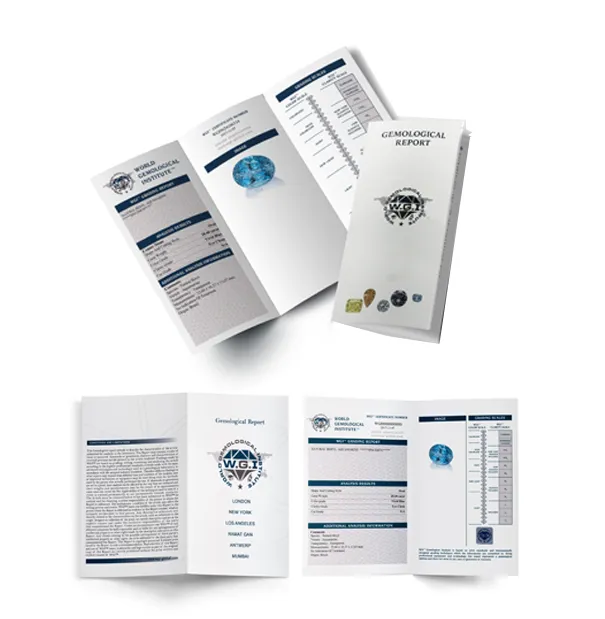
Photo: Wgi Labs, CC BY-SA 4.0, via Wikimedia Commons
There is a reason jewelry cases are full of white stones. Diamonds are classic, durable, and easy to love. But if you are building a piece you intend to wear for decades—and maybe pass down—the most interesting choice in the room may be the one with color. A colored center stone does something a diamond often cannot: it announces a point of view before anyone gets close enough to ask about carats.
That is the heart of the color-first heirloom idea. You are not choosing a gemstone because it is trendy. You are choosing one because it feels like you, because it can hold its own against a plain white tee and a cocktail dress, and because it gives the next generation something specific to remember.
Why a colored center stone reads like a legacy
A diamond is a neutral. That is its superpower and its limitation. A sapphire, ruby, emerald, or tourmaline is a signature. It makes people lean in. It starts conversations. It also tends to become the piece people associate with you—the ring you always wore, the pendant at every holiday table, the earrings that caught the light during a toast.
Heirloom value is not only about price. It is about recognition. The best inherited jewelry usually has a story attached: where it came from, when it was worn, why it mattered. Color gives that story a head start. A deep blue sapphire can feel like a family crest. A green tourmaline can feel like a secret. A ruby can feel like a promise. None of those impressions require a diamond to validate them.
And in 2026, color feels especially modern. Jewelry lovers are mixing metals, stacking sentimental pieces, and treating fine jewelry as everyday wear rather than a special-occasion costume. A colored stone fits right into that mood. It is not fussy. It is not predictable. It is the accessory equivalent of knowing exactly who you are.
Finding a shade that feels modern in 2026
The current mood is saturated but sophisticated. Think peacock blue, moss green, deep teal, sherry red, and oxblood. You are not looking for neon. You are looking for a color with depth—one that shifts slightly in daylight and looks rich under restaurant lighting.
Flattering is personal, not universal. The old rules about warm versus cool undertones are a useful starting point, but they are not law. Try the stone near your face in daylight, not just under the jeweler's spotlights. Wear it with the colors you actually put on in the morning. If you love navy, gray, cream, and denim, a cool sapphire or a green tourmaline will slot right in. If your wardrobe leans toward rust, camel, chocolate, and olive, a warm ruby or a sherry-toned tourmaline may feel more natural.
If you are torn between two shades, go slightly deeper and more saturated. Pale stones can be beautiful, but they can also disappear in real life. A colored center stone should have enough presence to justify its place in your jewelry wardrobe. You want it to look intentional from across the room, not just under a loupe.
Settings that let the stone live in real life
A colored stone should not be trapped in a safe. The right setting makes it wearable on a Tuesday, not just at a wedding. Bezel settings are the workhorses of this category: they protect the stone's edges, sit low on the hand, and look clean and modern. Low-profile prong settings can work beautifully too, especially for sapphires and rubies, but they need regular checkups.
For rings, consider a bezel, a low three-stone design, an east-west setting, or a signet-inspired look. For necklaces, a simple bezel pendant is almost impossible to over-wear. For earrings, drops with secure backs give you color near the face without feeling like costume jewelry. Bracelets are trickier because the wrist takes a beating, so save the most delicate colored stones for pieces that sit closer to the body.
Also think about lifestyle. If you are typing, lifting, gardening, or wrangling kids, a high crown is not your friend. A lower setting will get more wear, and more wear is what turns a purchase into an heirloom.
Durability, treatment, and provenance: ask before you commit
Not all colored stones are built for daily wear. Sapphire and ruby rank a 9 on the Mohs hardness scale, which makes them excellent candidates for rings. Emerald is around 7.5 to 8, but its inclusions can make it more brittle, so it benefits from a protective setting. Tourmaline is roughly 7 to 7.5, which is fine for earrings and pendants and workable for rings with care. None of these stones is indestructible, but none of them is fragile if you choose the setting wisely.
Treatment is the question many buyers forget to ask. Sapphires and rubies are commonly heated, which is accepted and should be disclosed. Emeralds are often oiled or resin-treated to improve clarity. Fracture filling is a bigger deal, and you need to know if it is present. Ask for treatment disclosure in writing. If the seller cannot explain what has been done to the stone, keep walking.
For significant purchases, look for a report from a reputable lab such as GIA, AGL, SSEF, or Gübelin. Ask whether the stone is natural or lab-grown, and make sure that is documented. Provenance—country of origin—can be interesting and sometimes price-relevant, but it should not replace the basics: cut, color, clarity, treatment, and durability.
Finally, ask about the practical stuff. Can the ring be resized? Is there a setting warranty? Will the jeweler check prongs annually? Do you need a separate appraisal for insurance? A beautiful stone is only an heirloom if it can survive real life and real paperwork.
The heirloom test
Before you commit, ask yourself three questions. Would I wear this now, with the clothes I already own? Does it feel like me, not like a trend I am trying to catch? And can I care for it without turning it into a museum piece?
If the answer is yes, you are not just buying a colored stone. You are starting a tradition with a little more personality than the usual white-stone script. Your crown does not have to be colorless. Sometimes the piece that gets passed down is the one that always looked most like you.